 Free Returns
 Free Shipping On All Orders $49.99+
 100% GoGreen Guarantee
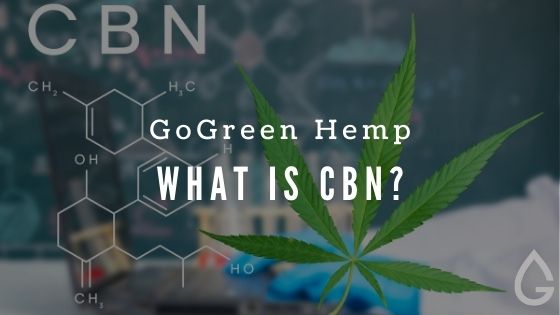
Quick takeaway: CBN (cannabinol) is a minor cannabinoid found in aged hemp. It forms naturally when THC oxidizes over time, is non-intoxicating in hemp-derived form, and shows up most often in evening-focused products and CBN+CBD blends. Below is what it is, where it comes from, and how it compares to other cannabinoids.
CBN has gone from a footnote in cannabinoid research to one of the more talked-about ingredients in the hemp space. You'll see it on gummy labels, in evening-focused tinctures, and increasingly paired with CBD in nighttime-routine formulations.
But what actually is CBN? Where does it come from, how is it different from CBD, and what should you know if you're considering it? This guide answers those questions in plain language and focuses on what the cannabinoid actually is — not on health claims.
What Is CBN?
CBN, short for cannabinol, is one of more than 100 cannabinoids naturally produced by the hemp plant. Unlike CBD (cannabidiol) and THC (tetrahydrocannabinol) — which are produced directly by the plant during growth — CBN forms over time as THC oxidizes. In other words, CBN isn't typically the goal of cultivation; it's what THC naturally becomes when exposed to oxygen, heat, and light.

This is why CBN is sometimes called the "aged hemp" cannabinoid: it tends to be more concentrated in older hemp material than in fresh harvests. Modern hemp processors can also produce CBN through controlled methods, which is how most commercial CBN products on the market today are made.
In hemp-derived form (containing less than 0.3% THC), CBN is federally legal in the United States under the 2018 Farm Bill, and it does not produce the intoxicating effects associated with THC.
How Is CBN Made?
There are two main paths from the plant to the bottle:
- Natural oxidation. Over time, THC in aged hemp material slowly converts to CBN. This is how CBN was originally identified, but it's not practical at commercial scale.
- Controlled processing. Hemp processors use heat, light exposure, or specific extraction methods to accelerate the conversion of THC into CBN. This is how most commercially available CBN is produced today.
After extraction, the CBN is isolated, tested for purity, and formulated into oils, gummies, softgels, or blended products. Reputable brands publish a Certificate of Analysis showing the verified CBN content and confirming the product stays within the federal THC threshold.
CBN vs CBD vs THC: How They Compare
All three are cannabinoids from the same plant, but they behave differently:
CBD |
CBN |
THC |
|
Source |
Produced directly by hemp during growth |
Forms when THC oxidizes; also produced via controlled processing |
Produced directly by cannabis plants |
Intoxicating? |
No |
No |
Yes |
Typical use |
Daily wellness routines |
Often featured in evening routines |
Recreational and medical (where legal) |
Federally legal (hemp-derived)? |
Yes (<0.3% THC) |
Yes (<0.3% THC) |
No (above 0.3% THC) |
Common formats |
Oils, gummies, topicals, capsules |
Gummies, tinctures, often blended with CBD |
Flower, edibles, concentrates (state-legal) |
Research status |
Most studied of the three (still ongoing) |
Limited; research is early-stage |
Extensively studied |
If you want a deeper side-by-side comparison just between CBD and CBN, our CBD vs CBN guide breaks down the differences in more detail.
Why People Are Interested in CBN
CBN has captured attention for a few practical reasons:
- It's non-intoxicating in hemp-derived form, like CBD, which means it doesn't produce a "high"
- It's frequently featured in evening-focused products, a popular product category in hemp wellness
- It pairs well with CBD — many formulations combine both cannabinoids in a single product (sometimes called a CBN + CBD blend)
- Research is still developing. Most CBN studies are early-stage; commercial interest has outpaced large-scale clinical data
It's worth being clear about that last point: while many people choose to incorporate CBN into their routine, individual experiences vary, and the available research on CBN as an isolated cannabinoid is still emerging. Always talk with a healthcare professional before adding any new supplement to your routine.
Is CBN Legal?
Yes — CBN derived from hemp (cannabis containing less than 0.3% THC by dry weight) is federally legal in the United States under the 2018 Farm Bill. State laws vary, so it's worth checking your local regulations. Reputable brands publish their Certificates of Analysis to confirm THC content stays within the legal threshold.
How CBN Shows Up in Products

You'll find CBN in a few common product formats:
- CBN gummies and edibles — pre-dosed, often combined with CBD, common in evening-routine products
- CBN tinctures and oils — taken sublingually, sometimes blended with CBD or other cannabinoids (like our CBN tincture for sleep, with 20mg CBN per dropper)
- CBN softgels and capsules — pre-measured, easy to fit into a routine
- CBN + CBD blends — formulations that combine both cannabinoids in one product (a popular pairing)
Onset time varies by format. Sublingual tinctures are typically processed faster than gummies or capsules, which need to go through digestion before the cannabinoids are absorbed.
What to Look for in a CBN Product
The quality markers for CBN are largely the same as for any hemp product:
- Third-party lab testing. Every CBN product should have a Certificate of Analysis confirming CBN content and verifying THC levels.
- Clear milligram amounts per serving. Labels should state CBN content per gummy, dropper, or capsule.
- Hemp source transparency. Where the hemp was grown, ideally U.S.-sourced.
- THC compliance. Less than 0.3% THC (federally compliant) or THC-free formulations.
- Brand transparency. Open about sourcing, manufacturing, and testing practices.
GoGreen Hemp's CBN products are third-party lab tested, made with U.S.-grown hemp, and produced in a GMP-certified facility. Every product has a public Certificate of Analysis available on the site.
GoGreen Hemp CBN Products

Our CBN lineup is built around evening-routine formats:
- CBN + CBD Sleep Gummies — pre-dosed gummies that combine CBN with CBD in a single serving
- CBN Oil Tincture — 600mg CBN + 1200mg CBD, for those who prefer adjustable, fast-acting drops
Browse the full CBN sleep collection to see current options, milligram amounts, and the latest Certificates of Analysis.
Frequently Asked Questions
What is the difference between CBN and CBD?
CBD is produced directly by the hemp plant during growth. CBN forms when THC oxidizes over time, so it's typically found in aged hemp material or produced through controlled processing. Both are non-intoxicating cannabinoids, but they're chemically distinct compounds.
Will CBN make me feel high?
No. Hemp-derived CBN (from cannabis containing less than 0.3% THC) is non-intoxicating and does not produce a high.
Is CBN legal in the United States?
Yes. CBN derived from hemp is federally legal under the 2018 Farm Bill, which legalized hemp containing less than 0.3% THC. State laws can vary, so check your local regulations before purchasing.
Where does CBN come from?
CBN forms naturally when THC oxidizes through exposure to oxygen, heat, and light over time. Hemp processors can also produce CBN through controlled methods to make the process practical at commercial scale.
Can I take CBN with CBD?
Many people choose to take them together, which is why CBN + CBD blends are a popular product format. Both are generally well-tolerated, but talk with a healthcare provider before adding any new supplement to your routine, especially if you take prescription medications.
Does CBN show up on a drug test?
Most drug tests are designed to detect THC, not CBN or CBD. However, broad-spectrum hemp products can contain trace amounts of THC. If drug testing is a concern, choose products labeled THC-free and verify with the Certificate of Analysis.
How long does CBN take to work?
Onset time depends on the format. Sublingual tinctures held under the tongue typically take 15–45 minutes to be processed. Gummies and softgels go through digestion first and typically take 30–90 minutes.
When do most people take CBN?
CBN is most commonly featured in evening-focused products and routines, often paired with CBD. Many people take it as part of a wind-down ritual rather than during the day.
What's the difference between CBN and CBG?
Both are minor cannabinoids, but they're chemically different. CBG (cannabigerol) is considered a "parent cannabinoid" — it's the precursor that the plant converts into other cannabinoids during growth. CBN, by contrast, forms after THC has already been produced and then oxidized. For more on CBG, see our What is CBG guide.
Is CBN the same as melatonin?
No. CBN and melatonin are entirely different compounds. CBN is a cannabinoid from hemp. Melatonin is a hormone naturally produced by the body and also sold as a standalone supplement. Some hemp products combine both ingredients, but they are not the same thing.
Final Thoughts
CBN is one of the more interesting minor cannabinoids in hemp because of how it forms — naturally from THC over time — and how it's increasingly appearing in evening-routine products and CBN + CBD blends. Like any hemp product, quality and transparency matter: third-party lab testing, clear milligram amounts, and honest sourcing.
If you're not sure where to start with cannabinoids, our 60-second CBD quiz can help point you toward a product that fits your routine.
About the Author

Romas Marcin — Founder, GoGreen Hemp
Romas founded GoGreen Hemp in 2016 and has spent nearly a decade studying cannabinoids, the endocannabinoid system, and the hemp industry. As a former college athlete and lifelong wellness advocate, he leads product development and quality standards across all GoGreen Hemp products — including the company's CBN and CBN + CBD blend formulations.
Read full bio → Connect on LinkedIn →
These statements have not been evaluated by the Food and Drug Administration. Hemp-derived products are not intended to diagnose, treat, cure, or prevent any disease or condition. Always consult a healthcare professional before adding any new supplement to your routine.


Leave a comment
This site is protected by hCaptcha and the hCaptcha Privacy Policy and Terms of Service apply.