%20(1).png)
.png)
%20(1).png)
%20(1)%20(1).png)

Hemp Seed Oil vs. CBD Oil: What's the Difference?

Quick takeaway: Hemp seed oil and CBD oil both come from the hemp plant, but they come from different parts of it and contain different things. Hemp seed oil is pressed from the seeds and contains essentially no cannabinoids. CBD oil is extracted from the flowers, leaves, and stalks and contains cannabidiol. Both are legitimate products with legitimate uses — the problem is that labeling conventions make them easy to confuse, and some sellers benefit from that confusion.
If you have ever ordered something labeled "hemp oil" expecting CBD and received a bottle with no cannabinoid content at all, you are not alone. It is one of the most common purchasing mistakes in this category, and it is almost entirely a labeling problem rather than a product problem.
Here is what separates the two, and how to tell which one you are actually looking at.
They come from different parts of the same plant
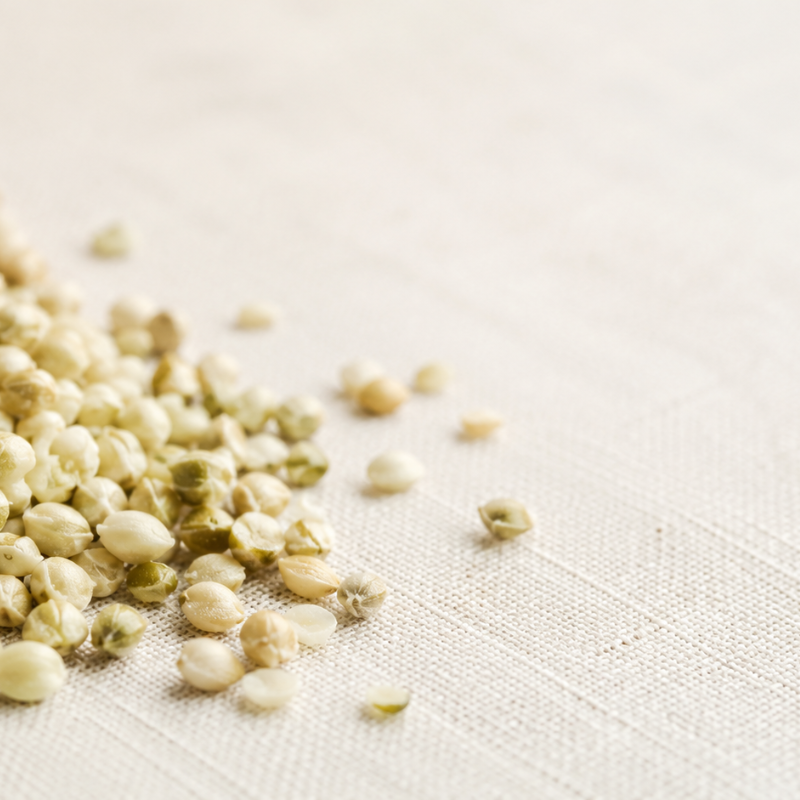
Both products originate from Cannabis sativa L. — the hemp plant. That shared origin is where most of the confusion begins, because it means a seller can accurately describe both as "hemp-derived" without telling you anything useful.
Hemp seed oil is cold-pressed from hemp seeds, in much the same way olive oil is pressed from olives or sunflower oil from sunflower seeds. Hemp seeds contain no meaningful quantity of cannabinoids. The cannabinoid-producing structures of the plant are the resin glands (trichomes), which are concentrated on the flowers and, to a lesser extent, the leaves. The seeds do not produce them.
CBD oil is made by extracting compounds from the flowers, leaves, and stalks of the plant — the parts where cannabinoids actually accumulate. That extract is then diluted into a carrier oil so it can be measured and consumed in reasonable serving sizes.
The practical consequence is simple: a bottle of pure hemp seed oil contains functionally no CBD, no matter how prominently the word "hemp" appears on the front.
What each one actually contains

Hemp seed oil is a culinary and cosmetic oil. Compositionally, it is notable for its fatty acid profile — it contains both omega-6 (linoleic acid) and omega-3 (alpha-linolenic acid) fatty acids in a ratio of roughly 3:1, along with gamma-linolenic acid. It has a nutty flavor, a green color, and a low smoke point, which is why it is typically used as a finishing oil rather than a cooking oil. In cosmetics it appears frequently as a lightweight carrier oil.
CBD oil is a cannabinoid product. The defining feature is a measured quantity of cannabidiol, expressed in milligrams, suspended in a carrier. Depending on how it is processed, it falls into one of three types:
Full-spectrum — contains CBD along with the plant's other naturally occurring cannabinoids, including trace THC below the 0.3% federal threshold
Broad-spectrum — contains multiple cannabinoids with THC removed to non-detectable levels
Isolate — contains CBD only, with everything else removed
We cover those distinctions in more depth in our guide to the different types of CBD.
The part that trips people up: hemp seed oil is often inside CBD oil
This is where a lot of otherwise careful shoppers get lost, so it is worth stating plainly.
CBD extract is highly concentrated. It cannot be sold or dosed on its own in any practical way, so it is always diluted into a carrier oil. Common carriers include MCT oil (usually coconut-derived), olive oil, and — yes — hemp seed oil.
So a tincture whose ingredient list reads "hemp seed oil, hemp extract" may be a perfectly legitimate CBD product that simply uses hemp seed oil as its base. The presence of hemp seed oil in the ingredients is not itself a red flag.
The distinction that matters is whether a cannabinoid content is disclosed in milligrams. A real CBD product tells you how much CBD is in the bottle and, ideally, in each serving. A hemp seed oil product sold as if it were CBD does not, because there is nothing to disclose.
How to tell them apart from the label alone
You can usually resolve this in about fifteen seconds. Here is what to look for.
Signs you are looking at CBD oil:
The words cannabidiol or CBD appear explicitly
A milligram amount of CBD is stated — either total per bottle, per serving, or both
The product is described as full-spectrum, broad-spectrum, or isolate
A batch or lot number is printed on the label
A QR code or URL linking to lab results is provided
Signs you are looking at hemp seed oil:
The label says hemp seed oil, hemp oil, or hemp extract with no cannabinoid figures
The cosmetic ingredient name Cannabis Sativa Seed Oil appears (this is the standardized INCI name for hemp seed oil and is a reliable tell)
It is marketed on nutritional grounds — omega fatty acids, culinary uses, skin conditioning
It is sold in larger volumes at lower prices than CBD tinctures of comparable size
There are no lab results linked, because there are no cannabinoids to test for
The single most useful question: does the label tell me how many milligrams of CBD are in here? If it does not, treat it as a hemp seed oil product regardless of how the front of the bottle is styled.
Why the milligram number can still mislead you
Even when a number is present, it is worth reading closely — because "1000mg" on the front of a bottle does not always mean 1000mg of CBD.
Some products list the total weight of the oil blend rather than the cannabinoid content. A bottle advertised as "1000mg Hemp Oil" may contain 1000mg of oil in total with a negligible cannabinoid contribution. Others state a total extract weight rather than an isolated CBD figure.
The fix is the same in every case: look for a per-serving figure and a link to third-party lab results. A product that says "33mg CBD per 1ml serving" and backs it with a current certificate of analysis has told you something verifiable. A product that says "1000mg Hemp" and links to nothing has not.
We go deeper on this and other label patterns in our guide to reading CBD labels.
Where the confusion comes from
It is worth understanding why this pattern is so widespread, because it explains where you are most likely to encounter it.
Several major online marketplaces do not permit the sale of CBD products under their policies. Sellers who want to reach those audiences list hemp seed oil products instead, and some of them lean into visual and verbal cues that a shopper would reasonably associate with CBD — dropper bottles, milligram numbers, green-and-white packaging, wellness language.
The result is a large volume of listings that are technically accurate and practically misleading. The seller never claims the product contains CBD. The shopper never gets CBD. The listing stays live.
This is not universally the case, and plenty of hemp seed oil is sold honestly to people who specifically want hemp seed oil. But if you are shopping in a venue where CBD is not permitted, and you are looking at something that resembles a CBD product, that resemblance is the thing to question.
When hemp seed oil is exactly what you want
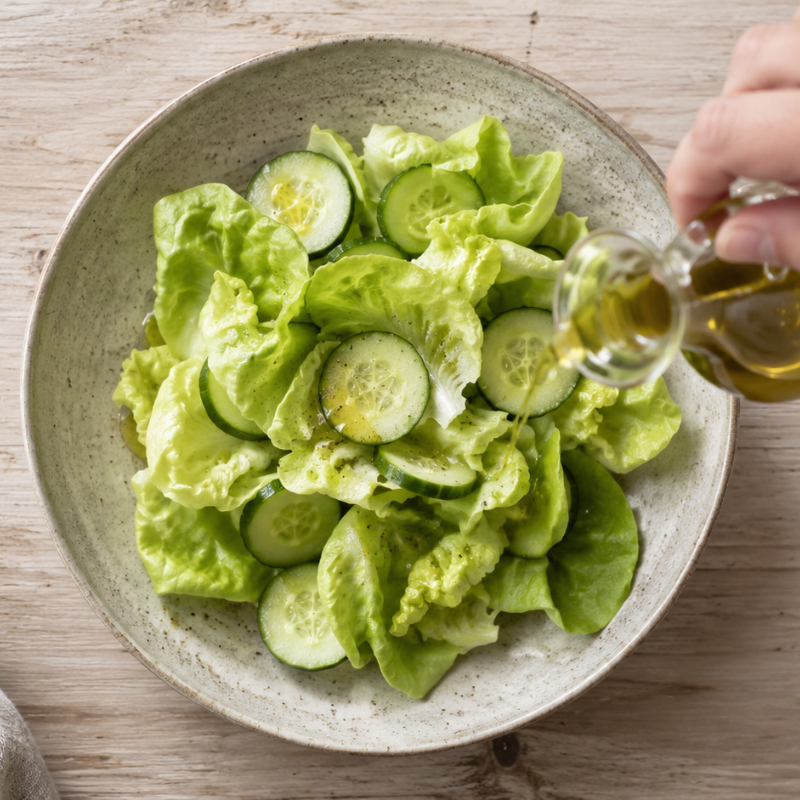
None of this makes hemp seed oil a lesser product. It is simply a different one, and it is a good product on its own terms.
Hemp seed oil is widely used as a finishing oil in cooking, drizzled over salads, grain bowls, or vegetables where its nutty flavor works well. It is a staple in cosmetic formulation as a light, non-greasy carrier. It is inexpensive, widely available, and shelf-stable when stored properly.
If you want an oil with a distinctive fatty acid profile for culinary or skincare use, hemp seed oil is a sound choice. If you want cannabinoids, it is the wrong aisle.
A short buyer's checklist
Before you order anything labeled "hemp," run through these:
Does the label state a CBD milligram amount? If not, it is not a CBD product.
Is there a per-serving figure, not just a total?
Is a batch or lot number printed on the product?
Do lab results exist, and do they match that batch?
Does the ingredient list distinguish between the carrier and the extract?
Does the price make sense? CBD extraction is expensive. A 30ml bottle priced like a pantry oil is a pantry oil.
Where are you buying it? If the venue does not permit CBD sales, you are almost certainly not buying CBD.

The short version
Hemp seed oil comes from the seeds and contains no meaningful cannabinoid content. CBD oil comes from the flowers and leaves and contains a measured amount of cannabidiol. Both are real products; only one of them contains CBD.
The label will tell you which is which — as long as you know that the deciding factor is a disclosed milligram figure backed by lab results, not the word "hemp" on the front of the bottle.
Every GoGreen Hemp product lists its cannabinoid content in milligrams, carries a batch number, and links to third-party lab results for that specific batch. You can browse our CBD oil tinctures or review our lab results directly.
Frequently Asked Questions
Is hemp oil the same as CBD oil?
Not necessarily. "Hemp oil" is an ambiguous term that is used to describe both hemp seed oil and CBD oil, depending on the seller. Hemp seed oil is pressed from hemp seeds and contains essentially no cannabinoids. CBD oil is extracted from the flowers and leaves and contains cannabidiol. Because the same phrase gets applied to both, the reliable test is whether the label discloses a CBD content in milligrams.
Does hemp seed oil contain CBD?
No. Hemp seeds do not produce cannabinoids. The resin glands that produce CBD are concentrated on the flowers and leaves of the plant, not the seeds. Trace amounts can occasionally appear in hemp seed oil through incidental contact with plant material during harvesting or processing, but not at levels that would make it a cannabinoid product.
Why does my CBD tincture list hemp seed oil in the ingredients?
Because hemp seed oil is being used as the carrier. CBD extract is too concentrated to use undiluted, so it is suspended in a carrier oil — commonly MCT oil, olive oil, or hemp seed oil. Seeing hemp seed oil in the ingredient list of a CBD product is normal and does not indicate a problem, as long as the cannabinoid content is separately disclosed.
What does "1000mg hemp oil" mean on a label?
It depends on the seller, which is the problem. It may refer to 1000mg of CBD, 1000mg of total hemp extract, or 1000mg of total oil weight. These are very different things. Look for a clearly stated CBD figure and a per-serving amount, and confirm it against a current certificate of analysis rather than relying on the front label.
Is hemp seed oil legal everywhere?
Hemp seed oil is a food and cosmetic ingredient sold widely in grocery and beauty retail, and it does not carry the cannabinoid-related regulatory considerations that CBD products do. Regulations vary by jurisdiction and change over time, so check the rules that apply where you live if you have a specific concern.
Can I use hemp seed oil for the same reasons I would use CBD oil?
They are different products with different compositions, so they are not substitutes for one another. Hemp seed oil is used in cooking and skincare formulation. CBD oil is used as a cannabinoid product. Choose based on which one you actually want.
† FDA Disclosure: These statements have not been evaluated by the Food and Drug Administration. This product is not intended to diagnose, treat, cure, or prevent any disease. Consult your physician before use, particularly if you are pregnant, nursing, or taking prescription medication.
About the Author

Romas Marcin — Founder, GoGreen Hemp
Romas founded GoGreen Hemp in 2016, two years before the Farm Bill federally legalized hemp production. He has spent nearly a decade studying cannabinoids, the endocannabinoid system, and the standards that separate quality hemp products from the rest of the market. He leads product development and quality standards at GoGreen Hemp.
Comments